Health and Safety Policy for Landscaping Heston
 Landscaping Heston is committed to maintaining a safe, healthy, and well-managed working environment for employees, subcontractors, clients, visitors, and members of the public. This policy sets out the standards and responsibilities that support safe delivery of landscaping work, from routine garden maintenance to larger outdoor projects. Our approach is based on careful planning, sensible working practices, and a constant focus on preventing harm.
We recognise that landscaping activities can involve multiple hazards, including moving machinery, sharp tools, manual handling, uneven ground, weather exposure, and interaction with plants, soil, water, and construction materials. For that reason, health and safety in landscaping must be considered at every stage of work, from initial assessment to final completion. All staff are expected to work in a way that protects themselves and others, while also preserving the quality and integrity of the site.
This policy applies to all operational activity undertaken by our teams and should be read as part of our wider commitment to safe practice. It is reviewed regularly to ensure it remains effective, practical, and aligned with current expectations. Safe landscaping services depend on preparation, communication, and the consistent use of controls that reduce risk without compromising service quality.
Responsibilities and Working Standards
Everyone involved in a project has a role in supporting a safe workplace. Managers and supervisors are responsible for planning jobs properly, ensuring suitable equipment is available, and confirming that workers understand the tasks and associated risks. Operatives must follow instructions, use equipment correctly, and report hazards, defects, incidents, or near misses immediately. A strong safety culture is built when responsibility is shared and concerns are addressed quickly.
Before work begins, a suitable assessment should be carried out to identify hazards and determine the precautions needed. This includes checking access routes, ground conditions, underground or overhead services, weather impacts, and the presence of vulnerable people, pets, or traffic nearby. Where necessary, barriers, signage, exclusion zones, and safe systems of work should be introduced to reduce exposure. In every case, landscaping safety policy requirements should support practical, proportionate controls.
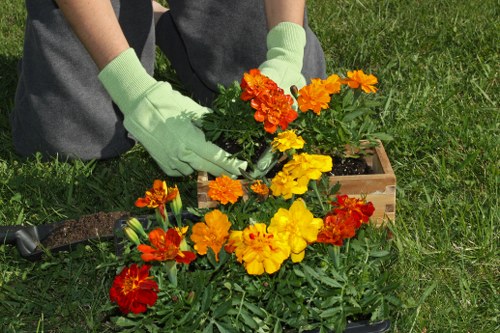
Equipment must be suitable for the task, properly maintained, and used only by trained or authorised personnel. Protective clothing and personal protective equipment should be worn as required, including gloves, eye protection, hearing protection, safety footwear, and weather-appropriate clothing. All tools and machinery must be inspected before use, and any item found to be unsafe must be taken out of service until repaired or replaced.
Managing Risk During Landscaping Work
 Working outdoors presents changing conditions, so adaptability is essential. Weather can affect soil stability, visibility, hydration, and the safe handling of equipment. Hot weather may increase the risk of fatigue and dehydration, while cold, wet, or windy conditions can create slip hazards and reduce concentration. Teams should pace their work sensibly, take breaks where needed, and remain alert to changes in conditions throughout the day.
Manual handling is another important concern in garden and landscaping safety. Materials such as soil, paving, plants, timber, and waste can be heavy or awkward to move. Loads should be assessed before lifting, mechanical aids used where possible, and team lifting arranged for larger or more difficult items. Workers should avoid repetitive strain by varying tasks and using correct posture and technique.
Safe use of machinery is essential, particularly when operating mowers, strimmers, hedge cutters, compact loaders, or other powered tools. Only trained users should handle such equipment, and guards, covers, and safety features must never be bypassed. Refuelling, cleaning, and maintenance should be carried out in accordance with manufacturer instructions, with engines switched off and hot surfaces allowed to cool before handling.
Site Conduct, Welfare, and Emergency Response
The company expects high standards of site conduct at all times. Work areas should be kept tidy to reduce slips, trips, and falls, with tools stored safely and waste removed promptly. Public areas must be protected where work is carried out near paths, entrances, roads, or occupied properties. Clear communication between team members helps prevent accidental contact with machinery, materials, or moving vehicles.
Welfare is an important part of safe working. Staff should have access to clean drinking water, rest opportunities, and suitable facilities where available. Supervisors should monitor signs of tiredness, stress, and overexertion, especially during physically demanding tasks. A healthy workforce is more capable of maintaining focus, making sound decisions, and working safely over long periods.
In an emergency, workers must stop work, make the area safe if it is possible to do so without further risk, and follow the agreed response procedure. First aid arrangements should be in place and known to the team, and serious incidents must be reported without delay.  Lessons learned from incidents, near misses, and inspections should be used to improve future practice and strengthen overall health and safety for landscaping.
Training, Monitoring, and Continuous Improvement
Landscaping Heston is committed to training staff so they can carry out their duties competently and safely. Induction, task-specific instruction, and refresher training should be provided where needed, particularly when new equipment, methods, or risks are introduced. Training records should be maintained so competence can be verified and updated appropriately.
Monitoring is central to effective safety management. Supervisors should carry out regular checks to confirm that safe systems are being followed, tools remain in good condition, and control measures continue to work as intended. Any shortcomings should be corrected promptly, and recurring issues should lead to a review of procedures. This helps ensure that landscape maintenance safety remains consistent and dependable.
 We also encourage continuous improvement through consultation, observation, and review. Although the work may vary from site to site, the core aim remains the same: to protect people, property, and the environment through disciplined, responsible practice. Each project should begin and end with safety in mind, ensuring that standards are not only met but sustained.
Policy Commitment
 This policy reflects our belief that safe working is essential to professional landscaping. All employees and contractors are required to comply with its principles and contribute to a culture where hazards are recognised early and controlled effectively. By following clear procedures, using equipment correctly, and maintaining awareness at all times, we can deliver high-quality work while safeguarding everyone involved.
Landscaping Heston will continue to review and improve this policy as part of its commitment to responsible operations, reliable service, and a safe working environment across all landscaping activities.